Product Notes
I Built a Receipt Splitter for Group Dinners
Why I built TabChop: a receipt-first bill splitter for messy group dinners, shared items, guest access, and getting paid back.
Quick answer: TabChop solves the group-dinner problem by turning one paid receipt into a shared workflow: scan the check, let people claim items, split shared dishes, and move straight into repayment.
I built TabChop because the end of a group dinner kept turning into a tiny accounting job. One person pays, everyone says they will Venmo later, and then the person holding the receipt has to remember who had which tacos, who shared queso, who skipped drinks, and who still has not paid.
That is a small problem, but it is exactly the kind of small problem that becomes annoying because it happens around friends.
What it does
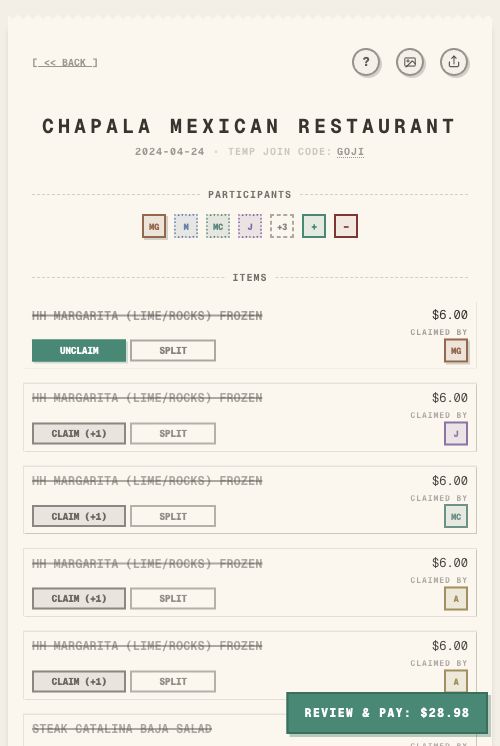
TabChop turns a receipt into a shared split.
The basic flow is:
- Upload or scan the receipt.
- Review the detected line items.
- Share the split by link, QR code, or guest entry.
- Let people claim what they ordered.
- Split shared items across the right people.
- Use the final totals to pay the host back.
The point is not to make another long-running expense ledger. There are already good tools for roommates, trips, and recurring balances. I wanted something closer to the moment when the restaurant receipt lands on the table.
Why I did not just build a calculator
Even-split calculators are fine when everyone agrees to split evenly. The annoying case is the one where even splitting is just unfair enough to bother people:
- Two people ordered cocktails and three did not.
- One couple shared an entree.
- The table shared appetizers, but not everyone ate them.
- Someone joined late.
- One person paid the entire check and now has to collect.
In that case, a calculator still leaves the host doing most of the work. The receipt has to become something the group can interact with.
The harder part is shared state
OCR is only one part of this. The more interesting product problem is what happens after the receipt becomes structured.
Once the receipt is parsed, the app has to answer a few very human questions:
- Is this item mine, shared, or unclaimed?
- Can a guest participate without making an account?
- What happens if two people tap the same thing?
- How do tax and tip stay understandable?
- How does the host know who is actually done?
Those are not huge distributed-systems problems, but they matter in the room. If the app creates ambiguity, people go back to texting.
Guest access mattered more than I expected
I originally underestimated how important guest flows would be. At a dinner table, requiring everyone to sign up is a great way to make nobody use the thing.
So the share flow has to support a few paths:
- A link for people who want to join from their phone.
- A QR code when everyone is still sitting together.
- Guest entries when the host just needs to keep moving.
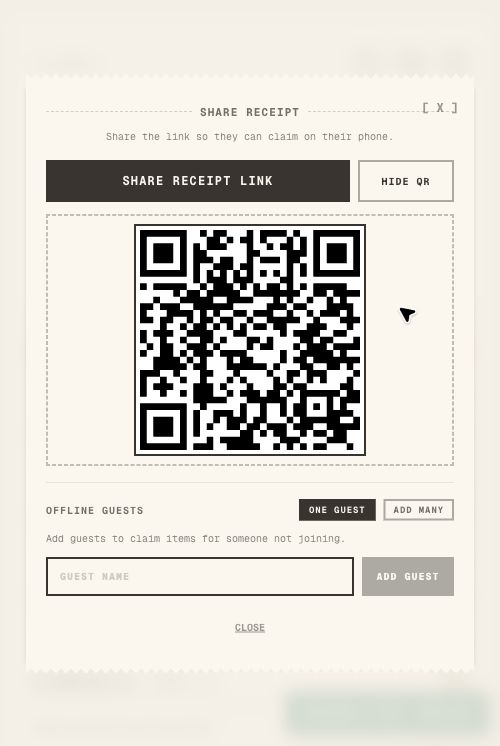
The ideal state is that the host does not have to become tech support before becoming the accountant.
Payment is deliberately a handoff
TabChop is not trying to become a payments company. It calculates the split and then helps the host collect through the payment methods people already use.
That means Venmo, Cash App, and Zelle are treated as handoff targets instead of balances trapped inside another app. Where a payment link can carry useful details, the app prepares them. Where the payment flow depends on a bank app, the goal is to make the amount and recipient easy to copy.
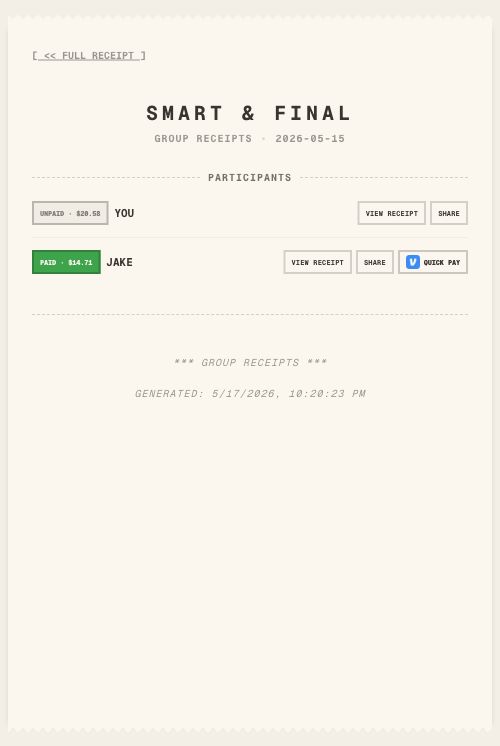
This is less glamorous than building a wallet, but it fits the job better. The person who paid dinner does not want a new financial graph. They want to be paid back.
Things I am still thinking through
There are a few product questions I would especially like feedback on:
- How much correction UI should exist after receipt parsing?
- Should item claims feel more like a checklist, a cart, or a ledger?
- What is the least annoying way to handle partially shared items?
- Should hosts be able to lock a receipt once everyone is done?
- How much payment status tracking is useful before it starts feeling weird?
The edge cases are where this gets interesting. A simple receipt is easy. The real test is a messy receipt with appetizers, modifiers, people sharing dishes, and one friend who already left.
Quick FAQ
Is TabChop a Splitwise replacement?
No. Splitwise is better for long-running shared balances. TabChop is focused on the live restaurant receipt problem.
Does TabChop process payments?
No. It calculates the split and hands people off to the host's payment method where possible.
Do all friends need accounts?
No. The product is designed around links, QR sharing, and guest-friendly participation because dinner-table signup walls are painful.
Why not just use ChatGPT?
ChatGPT can help reason through a receipt, but a group split needs shared state: people claiming items, shared dishes, payment status, and a host view.
Try it
The best way to judge it is with an actual receipt, preferably one annoying enough that splitting it manually would make someone sigh.