Dinner Bills
Split a Dinner Bill Without Awkward Math
Use itemized claiming, shared-item splits, and clear personal totals to split a dinner bill without calculator drama.
Quick answer: To split a dinner bill without awkward math, let the receipt hold the facts. TabChop gives the group item claims, shared splits, and personal totals so nobody has to negotiate from memory.
Dinner math gets awkward because nobody wants to be the person arguing over a few dollars. But when the bill is uneven, pretending everyone owes the same amount can feel worse.
Here is how to split a dinner bill without turning the end of the meal into a calculator session.
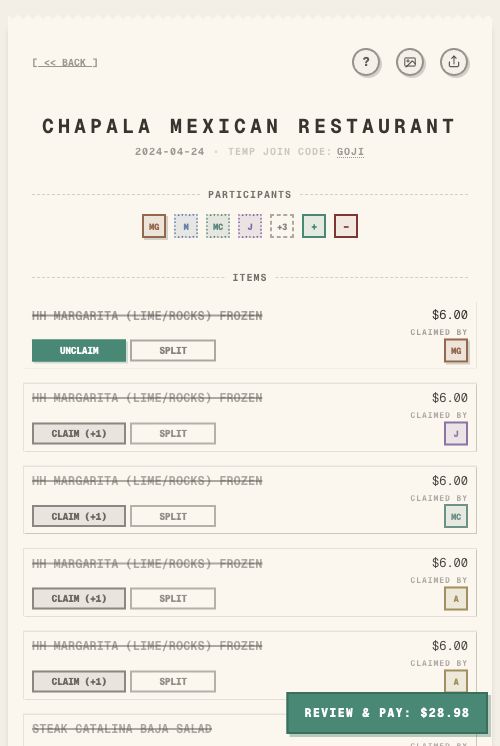
Start with the real receipt, not memory
People forget details fast:
- Who shared the appetizer?
- Did tax get included?
- Was the tip already on the receipt?
- Did someone order two drinks or one?
Scanning the receipt gives the group a shared list before the debate starts.
Let people claim instead of confess
Asking "what did everyone have?" puts pressure on the host to remember and on friends to speak up. A claim-based receipt is easier: each person taps the items they ordered.
That makes the split feel less personal. The receipt is doing the accounting, not the host.
Treat shared items as their own problem
Shared dishes are usually where dinner math breaks down. Do not spread every shared item across the entire table unless the whole table actually shared it.
In TabChop, a shared row can be assigned to the exact people who ate it. That works for:
- Appetizers
- Shared sides
- Desserts
- Bottles
- Family-style plates
Keep the running total visible
The biggest benefit of a live receipt is feedback. When someone claims an item, their total changes. When a shared item is split, the math updates.
That means people can catch mistakes before payment:
- "I did not have that."
- "Add me to the fries."
- "That dessert was split three ways."
- "My total looks right now."
Make payment the last step, not another negotiation
Once totals are clear, payment should be mechanical. Each person sees what they owe and pays the host through the available method.
The host should not have to send separate texts with different numbers after the meal.
Common mistakes
Splitting drinks evenly
Drinks can swing the bill quickly. If only some people ordered them, claim them by person.
Ignoring the quiet person
The person who ordered less may not want to push back. Itemized claims make fairness visible without forcing an argument.
Paying before the receipt is complete
If someone pays early and totals change later, the host has cleanup work. Finish claims first.
Quick FAQ
What if everyone wants equal split?
Use equal split if everyone agrees. TabChop is most useful when equal split does not match what people ordered.
What if someone leaves early?
Add them as a guest or claim their items for them while the receipt is still fresh.
What is the fastest fair method?
Scan the receipt, claim personal rows, split shared rows, and settle from each personal total.
Make the end of dinner boring
That is the goal. The food can be social; the bill should be straightforward.
Key takeaways:
- Use the receipt as the source of truth.
- Let people claim their own rows.
- Resolve shared items before payment.